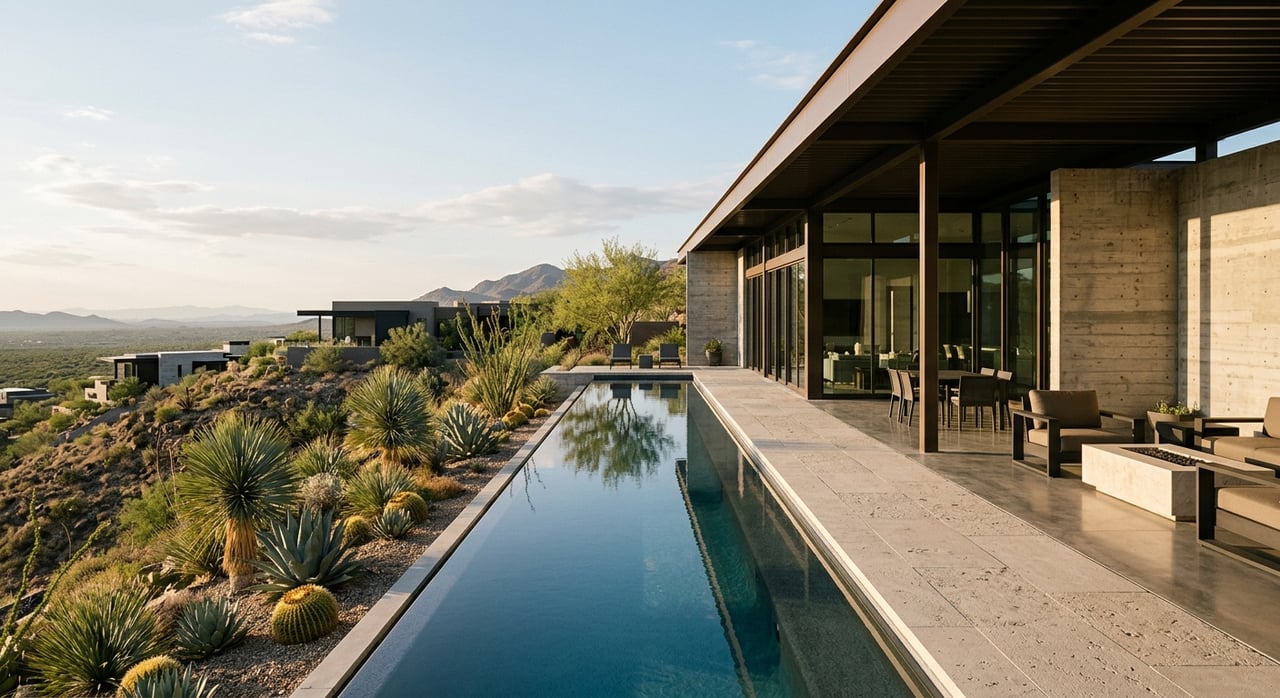
Choosing a custom lot in Ascaya is exciting, but it can also get complicated fast. The lot with the biggest views or the largest acreage is not always the one that gives you the best building experience. If you want to make a smart decision, you need to look beyond the sales sheet and focus on how each homesite will actually work for your goals. Let’s dive in.
Start With the Right Lot Category
Your first step is to separate lot type from lot quality. Ascaya’s custom inventory is divided mainly between Estate Homesites and the higher-elevation Cloud Rock Collection, and each serves a different kind of buyer.
Estate Homesites offer a wider range of lot sizes and view orientations. Ascaya describes these homesites as terraced into the McCullough Mountain Range to maximize privacy and capture sightlines in different directions. If you want more choice in size, layout, and orientation, this category may give you more flexibility.
Cloud Rock Homesites sit at Ascaya’s highest elevations. Ascaya positions them as its pinnacle release, with sweeping 360-degree views across the Las Vegas Valley and Sloan Canyon, along with a stronger privacy story and a sense of scale. If your top priorities are elevation, seclusion, and broad panoramic views, Cloud Rock may be the better fit.
It also helps to ask whether you want a raw lot at all. If you prefer a finished product instead of starting from the ground up, Ascaya also offers The Canyon Residences and Desert Design Study Homes as separate ownership options.
Look Past Acreage
One of the biggest mistakes buyers make is assuming a larger lot is automatically the better lot. In Ascaya, that is not always true.
What matters most is the buildable pad, building envelope, and maximum height, not just total acreage. A larger parcel can still have a smaller or less efficient usable build area, depending on the shape and site conditions.
For example, one Ascaya homesite is 1.28 acres with a 26,295-square-foot building envelope and a 22-foot maximum height. Another is larger at 1.66 acres but has a 15,421-square-foot building envelope and a 32-foot maximum height. That comparison shows why gross lot size alone does not tell the full story.
When you compare lots, focus on these questions:
- How large is the building envelope?
- What is the maximum building height?
- How much of the site feels practical for your floor plan?
- Does the lot better support a one-story or two-story design?
- How will the topography affect outdoor living areas, pool placement, or access?
A lot can look impressive on paper and still be less usable than a smaller, better-shaped site.
Match the Lot to Your Home Design
The right homesite should support the kind of home you actually want to build. That sounds obvious, but it is where many buyers get ahead of themselves.
If you want a sprawling one-story plan with broad indoor-outdoor living, your lot needs the right pad size and envelope to make that efficient. If you are open to a two-story concept, a different combination of envelope size and height allowance may work better.
Ascaya’s design approach emphasizes homes that complement the desert setting and take advantage of views. At the same time, Henderson’s code says building orientation should maximize opportunities for shade and solar energy. That means orientation is not just about what you see from the home. It also affects how the home lives, performs, and may accommodate solar planning in the future.
This is why lot selection and home design should be considered together from the beginning. A site that works beautifully for one concept may be a poor fit for another.
Treat Views as Important, Not Guaranteed
Views are a major part of Ascaya’s appeal. Depending on the site, they may open toward the Strip, surrounding mountain peaks, or Sloan Canyon National Conservation Area. That said, views should be treated as a meaningful feature, not an absolute guarantee.
Ascaya notes that actual views may vary and may change in the future, and its maps and site plans are not to scale. That does not make views less valuable, but it does mean you should evaluate them carefully and realistically.
When touring candidate lots, pay attention to:
- The primary view corridor
- The direction of the best sightlines
- How the envelope and height allowance affect what you can actually capture
- Whether your preferred rooms and outdoor spaces can face the strongest views
A lot with dramatic views from one corner may not deliver the same result once the home is designed within the allowed envelope.
Factor in Hillside Build Complexity
Ascaya’s setting is one of its greatest strengths, but hillside building comes with added complexity. In many cases, the most dramatic lots also require more engineering, more grading analysis, and more careful planning.
The City of Henderson’s hillside rules matter here. As slope increases, allowable site disturbance decreases, and driveway standards can become more demanding. If a driveway extends beyond 150 feet, it must comply with fire-code and hillside-driveway guidance.
The city’s custom-home permit checklist also requires several items that shape lot choice early, including:
- HOA approval letter
- Recorded final map or parcel map
- Drainage approval or waiver
- Associated civil improvement plans
- Plot and grading plan
- Geotechnical report
- Fire sprinkler plans for all custom homes
A grading permit may also be required for lots over 1 acre or where cut and fill is significant. In a hillside luxury community, that can be a major factor in both timeline and cost.
Ask What Can Be Built Efficiently
A better question than “What can I build here?” is “What can I build here efficiently?” That shift in mindset can save you time, money, and frustration.
Ascaya describes the custom-home process as collaborative between the owner, architect, and the Architectural Review Committee. It also notes that the custom-home timeline typically runs about 18 to 24 months from construction start to move-in. So even though Ascaya does not impose a homesite building timeline requirement, the actual construction process still involves review, permitting, and coordination.
If you are planning extras like a guesthouse, casita, detached garage, or pool, expect additional permit coordination for those features. A lot that seems ideal for your wish list may become less attractive if the site makes those additions difficult or inefficient.
This is where a lot-by-lot evaluation matters most. The strongest lot is often the one that balances views, privacy, buildability, and process.
Consider Daily Life in Ascaya
A custom lot is not just a building site. It is also where your day-to-day life in the community begins.
Homesite owners have access to Ascaya amenities from day one, including during design and construction. Those amenities include the Clubhouse, zero-edge pool, fitness and movement studios, tennis and pickleball pavilion, Family Park, and more than two miles of private trails.
That lifestyle piece should influence your decision. If you plan to use the Clubhouse, trails, and shared amenities often, being closer to the community core may matter more than gaining a little extra elevation.
On the other hand, if your goal is maximum privacy, stronger separation, and a more elevated setting, upper ridgeline homesites may be more appealing. Ascaya also highlights access to the broader region, with the Las Vegas Strip about 20 minutes away and outdoor destinations like Sloan Canyon, Red Rock Canyon, and Lake Mead within reach.
A Simple Way to Compare Ascaya Lots
When you narrow your options, compare each candidate homesite side by side using the same criteria. That keeps emotion from taking over too early.
Use this checklist:
- Lot category: Estate Homesite or Cloud Rock
- Building envelope size
- Maximum height allowance
- Slope and grading complexity
- Driveway access considerations
- Main view corridor
- Privacy level
- Proximity to amenities
- HOA review considerations
- Fit for your preferred home design
This approach gives you a clearer picture of which lot looks best and which lot works best.
Which Ascaya Lot Type Fits Best?
For many buyers, Cloud Rock is the best match when the goal is the highest elevation, the strongest privacy position, and broad panoramic views. It is the category that best fits buyers who want a dramatic homesite experience.
Estate Homesites are often the better fit when you want more variety in lot size, orientation, and selection. They can offer more options to match a specific home concept or lifestyle preference.
If you want a simpler path to ownership, it may also be worth comparing a raw custom lot against The Canyon Residences or a Desert Design Study Home. For some buyers, less construction complexity can be just as valuable as customization.
The right answer depends on how you want to live, what you want to build, and how much complexity you are willing to take on to get there.
If you want help comparing Ascaya homesites through the lens of design fit, buildability, and long-term value, connect with Mark Pepe. You will get a consultative, local perspective focused on helping you choose the lot that truly fits your goals.
FAQs
What should you compare first when choosing a custom lot in Ascaya?
- Start with the building envelope, maximum height, slope, driveway access, and view corridor before focusing on total acreage.
What is the difference between Cloud Rock and Estate Homesites in Ascaya?
- Cloud Rock emphasizes the highest elevations, stronger privacy, and sweeping panoramic views, while Estate Homesites offer more variety in lot sizes and view orientations.
Does Ascaya require you to build right away after buying a homesite?
- Ascaya says it does not impose a homesite building timeline requirement, though your custom home still goes through design review and City of Henderson permitting.
Why does buildable area matter more than lot size in Ascaya?
- A larger lot does not always provide a larger or easier-to-use building envelope, so the usable build area often matters more than gross acreage.
What permits and approvals matter for a custom home in Ascaya?
- Buyers should expect HOA review, City of Henderson permit requirements, drainage and civil planning review, geotechnical reporting, and fire sprinkler plan requirements.
How long does it usually take to build a custom home in Ascaya?
- Ascaya says the typical timeline is about 18 to 24 months from construction start to move-in.
Should you choose a lot based mostly on the best view in Ascaya?
- Views are important, but they should be weighed alongside buildability, orientation, privacy, slope, and how efficiently your home can be built on the site.
Are there alternatives to buying a raw custom lot in Ascaya?
- Yes. Buyers who want a finished product can also consider The Canyon Residences or Desert Design Study Homes.